Walking the
Dogs
with
Geoff Hobson
Be sure
to check out Geoff's website Click
Here
 |
|
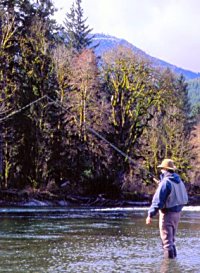
A
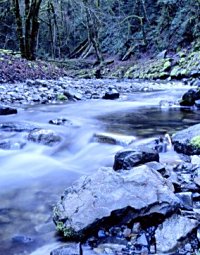
small stream that hosts chum salmon.
Vancouver Island, BC
|
|
|
|
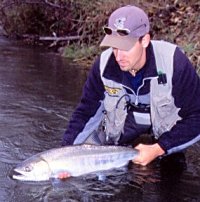
Mark
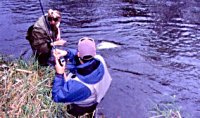
Pavesic fishing for chum.
Vancouver Island, BC
|
|
|
|
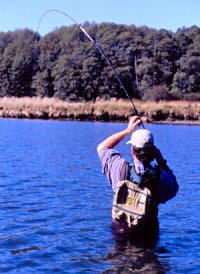
An
angler battles a chum salmon.
Vancouver Island, BC
|
|
|
|
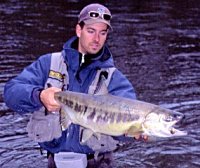
Mark
Pavesic holds a chum salmon.
Vancouver Island, BC
|
|
|
|
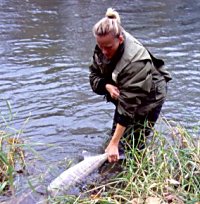
Jody
Pavesic releases a chum salmon.
Vancouver Island, BC
|
|
|
|
Mark
Pavesic holds a chum salmon.
Vancouver Island, BC
|
|
|
|
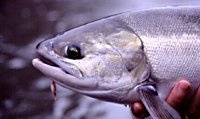
A
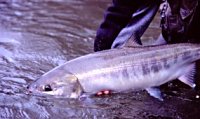
chrome chum salmon.
Vancouver Island, BC
|
|
|
|
Jody
Pavesic releases a chum salmon.
Vancouver Island, BC
|
|
|
|
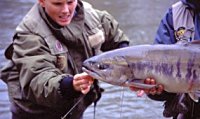
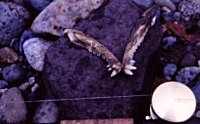
A
set of chum salmon teeth.
|
|
|
|
Mark
Pavesic battles a chum.
Vancouver Island, BC
|
|
|
|
A
chrome chum salmon.
Vancouver Island, BC
|
The fall season had
arrived slowly, but surly. It had been an untypical dry season on Vancouver
Island, with little or no moisture fallen on this usually waterlogged
region of Canada. To most of the suburban world, a slow transformation
in the weather had left the people of Vancouver Island clinging on to
the last threads of the long temperate days of summer. To myself, an agonizing
wait till the mild misery of fall, and the first of the salmon runs return
into my sunburnt life.
Rumors of the fishery had been escalating with every rainfall. Coho by
the thousands, evading the coastal rivers of Vancouver Island. The only
way to put any truth to the story would be to dust off the gear, and head
to the river of choice to sample some of these bullets of the pacific
coast. With a well-placed phone call to a local fish fanatic, my season
had a start time of 6:30 AM, not soon enough.
Talking of seasons
past, the fish fanatic Mark Pavesic and I, traveled forty-five minutes
north to the emense fishery of the Cowichan, a system deep with salmon
history. With the morning light casting shadows on to the weathered trail,
we navigated our way to the lower reaches of the river; a slow piece of
water known for giving up fresh coho on each rising tide.
The first look at the river had sent a pleasant grin to appear on our
faces. Salmon, and lots of them breached all around us and not a soul
to be seen. Mark started working his way down towards the tail out of
the pool while I presented my first cast of the morning at the middle
of the run. My line had barely started its swing when a savage strike
abruptly pulled my float into the cool depths of this over-size coastal
creek.
With a strong, upward
lift, I placed the hook into fish and waited for the typical "coho
roll" these fish were notorious for.
To
my surprise, numerous feet of my line disintegrated from my reel, leaving
myself to wonder which of the salmon species had paid me a visit. With
one spectacular leap my question was answered. A chum salmon around 14
pounds dancing across the surface like its chrome counterparts, but with
a definite attitude to boot. A few more drag burning runs and the fish
had settled enough to come to hand. The fish was surprisingly clean, showing
very few signs of freshwater deterioration, and was still hosting numerous
sea lice, proving how fresh this fish was. With evidence of these fish
in the river, I knew my day would not be dull.
Upon the release of this fish, a yell of "fish on!" had echoed
it's way upstream. Mark himself was tied into a powerful chum taking the
express route towards the tail-out only fifty yards below Mark's position.
In true chum fashion, his fish made every attempt to shake his hook with
huge leaps and monster runs, but eventually came to hand.
From that cast on,
it was rare our gear could travel more than twenty feet without it being
savagely attacked by one of these brutes. Mark and I had been enjoying
one of those days' anglers' dream of. With all the action, we were quick
to forget what we came for, the coho. Settling for insedental catches
of chrome, we proceeded to beef up our tackle and prepared to tie into
more chum salmon than you could shake a fishing rod at.
Over the years, the chum salmon been have seen as an undesirable on the
West Coast. They have gained a reputation for being a purple and green
toothy critter that has little or no taste and envade every ditch, creek
and river from Alaska to California in the fall months. They
were given the name of "dog salmon" due to the large teeth they
develop during their spawning stage. With these misconceptions in place,
the salmon have thrived while many other species have declined to record
lows. The truth
is that the chum are a tremendous fighting specimen, if not the best out
of the five species and cromers can be encountered on a regular basis
if timed right. As for tablefare, the chum is considered among the best
for smoking due to their high oil content.
The chum salmon (Oncorhynchus
keta ) are the last of the five pacific salmon species to spawn and can
live from three to five years on average. They primarily feed on plankton
and crustaceans such as tiny shrimp and krill and can reach a mature weight
of 35 pounds, but typically range
from 8-18 pounds. The chum can easily be identified by horizontal purple
bars on their side and a pronounced set of teeth. The males tend to developed
a large kype and take on more of a football shape while the females tend
to put on less color and are much more streamlined in appearance. The
chum salmon for the most part utilize the lower reaches of a river to
spawn and there young spend very little time in the system before entering
brackish estuaries and the beginning of their migration.
Techniques for the
chum are as simple as it gets. Rods consists of a 9 to 10 1/2 foot medium
action set-ups with a sturdy backbone to move these some-times stubborn
fish and a levelwind open faced reel loaded with 150 yards of your favorite
12 to 15 pound mainline. From this point on,
the cheaper the better. I have found over the year that the chum is rarely
a selective fish and readily take almost anything as long as it is well
presented. Inexpensive and widely available, wool in colors of green,
red, and orange placed on a size 2 to 2/0 hook work just as good if not
better than most tackle but at a fraction of the price.
These fish can be
successfully hit bottom bouncing or float-fishing depending on the river
bottom structure but I personally choose the float system for detecting
subtle strikes
and the lack of hang-ups on the bottom. Floats, like anything come in
various colors and sizes. I have grown on the 6" foam floats by Gibbs
due to price and durability. Leader sizes vary from 18 to 40" depending
on the water clarity of the day and I would recommend a minimum of 12
pound test due to the large teeth these fish carry at this stage in their
life. For the weight, pencil lead and surgical tubing works perfect under
most conditions.
Locations for the
chum salmon are found in the lower reaches of a river system and a general
rule is the lower you can get, the fresher the fish will be. Slower runs
with 2-10 feet of depths will hold good numbers of fish and chum will
often hold tight to the banks and to any structure. Watch for jumping
fish and cast in that area, because these fish are notorious for traveling
in large schools therefor where there is one there could possibly be a
hundred.
Times for these fish a heavily dependent on weather and river flows. Often
some of the best chum fishing I have experienced has been under exceptionally
high water conditions. The chum salmon will mill around in river estuaries
for weeks waiting for adequate water level before entering a system. The
first of the chum salmon with begin to enter the rivers in late September
and continue into early December. I personally find late October throughout
mid November to be the best depending on how much water is in the river.
A fish of 10 to 20 pounds capable of excruciating runs and spectacular
leaps, flooding your locals rivers by the thousands and will readily take
baits… sounds like an ideal fisherman quarry. Than why have the chum
salmon of the pacific gotten such a poor reputation? With numerous spot
closures on chinook and coho salmon these days, anglers are searching
long and hard for a substitute for their adrenaline fix. This is that
fix. So beef up your gear, grab a friend and go walk a few "dogs"
 |
|
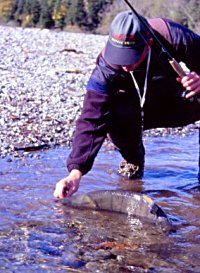
Paul
Deslauries with a chum salmon.
Vancouver Island, BC
|
Rivers of Choice
In British Columbia, the Chum salmon are found in a majority of
coastal rivers. Systems prone to larger runs of the river tigers
include the British Columbia's Cowichan, Harrison, Chehalis and
Vedder rivers and Washington's rivers to name a few, with runs
varying from a few hundred to over 500,000. For the most up-to-the-minute
information, periodically check with your local tackle shop for
the most productive runs in your area and also check you local
regulations for recent closures.
|
 |
|
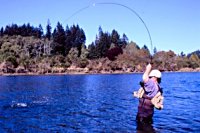
An
angler battles a chum salmon.
Vancouver Island, BC
|
The Stuff Records are Made Of
The world record chum salmon weighs in at an astonishing 35 pounds
caught by Todd Johansson on July 11, 1995 in Edye pass, British Columbia.
|
© Copyright Geoff Hobson
|